

Anxiety Therapy in Chicago — Find Calm, Clarity & Resilience
Anxiety doesn’t have to rule your life. At Balanced Awakening, our Chicago therapists help you reclaim peace by combining evidence-based approaches (CBT, ACT, exposure) with body-centered work (somatic, breathwork, EMDR). We’ll help you understand what’s driving your anxiety, build tools that feel real, and restore confidence — whether you work with us in person or online.
Meet Our Anxiety Therapists
-
![]()
Chuying (Selestia) Lin, M.Phil.ED
-
![]()
Dr. Robbi Wiggins
-
![]()
Jackie Bobos, M.S.Ed.
-
![]()
Paichence Maze, LCPC
-
![]()
Brenna Wells, LPC
-
![]()
Alex Garcia, LPC
-
![]()
Kayleigh Reed, LPC
-
![]()
Dr. Gayathri Cheran
-
![]()
Paili Bachrach, LSW
-
![]()
Denice Spencer, LCPC
-
![Nicole Pratl, MSW Anxiety Therapist Chicago]()
Nicole Pratl, MSW
-
![Emma Mannes, LCSW Anxiety Therapist Chicago]()
Emma Mannes, LCSW
-
![Bekka Brennan, LCPC, ExTh Anxiety Therapist Chicago]()
Bekka Brennan, LCPC, ExTh
-
![]()
Allie Cromer, LCSW
-
![]()
Olivia Palumbo, LPC
-
![]()
Dr. Maggie Riemer
-
![Portrait of a young woman with long dark hair, smiling, in a gray top, against a white background.]()
Rachel Rood, LCSW
-
![A smiling woman with wavy brown hair, wearing a navy blue blouse and a gold necklace with a pendant, against a white background.]()
Dr. Lia Panos
-
![Chicago therapist for kids with long brown hair, wearing a light purple collared shirt and a thin necklace, against a white background.]()
Nishma Patel, LCPC
-
![Portrait of a smiling woman with shoulder-length dark brown hair, wearing a navy blouse, against a white background.]()
Dr. Megan Devine
-
![Amani Rabai]()
Dr. Amani Rabai
-
![Jessica Smith, Psy.D. Anxiety Psychologist Chicago]()
Dr. Jessica Smith
-
![]()
Isa Martinez Mulcahy, LCPC, R-DMT
-
![Lisa Sniderman, LCSW Anxiety Therapist Chicago]()
Lisa Sniderman, LCSW
-
![Chicago therapist for women with long red hair, wearing a green ribbed sleeveless top and gold earrings, smiling at the camera against a white background.]()
Zana Van Der Smissen, LCPC, PMHC
-
![]()
Claire Sweetow, LCSW
-
![Andrea Espinosa, LCSW Anxiety Therapist Chicago]()
Andrea Espinosa, LCSW
-
![Chicago therapist for women with long brown hair, wearing a blue sleeveless top, against a white background.]()
Lauren Schmalbruch, LCPC
-
![]()
Lucy Stock, MA
-
![Jaleesa Pirtle, LCPC Anxiety Therapist Chicago]()
Jaleesa Pirtle, LCPC
-
![Heather Kallman, Psy.D. Anxiety Psychologist Chicago]()
Dr. Heather Kallman
-
![Stefani Godina, LCSW Anxiety Therapist Chicago]()
Stefani Godina, LCSW




























Schedule Your 1st Appointment
Does Anxiety Keep You On Edge?
Do you struggle to silence intrusive thoughts that make you ruminate and worry?
Are you buckling under the pressure you impose on yourself to succeed?
Is anxiety the reason why you have difficulty maintaining healthy relationships, avoid socializing, or don’t go after what you want in life?
Perhaps without even realizing it, your mind is always stuck in future tense, imagining worst-case scenarios that generate fear and panic. Because your body can’t tell the difference between what is made up and what’s actually happening, you may experience rushes of adrenaline that mimic what it feels like when you are in danger.
Whenever your fight-flight-or-freeze response gets activated, it may culminate in panic attacks. As a sense of impending doom takes over, you might break into a sweat, hyperventilate, and feel your heart race uncontrollably, feeling as though you’re having a heart attack.
What Does Anxiety Feel Like?
You may be experiencing anxiety and not even know it! Anxiety can impact your body and mind in many ways.
Cognitively (thoughts and mental processes):
Racing thoughts: The mind may feel like it’s going a mile a minute, jumping from worry to worry.
Intrusive thoughts: Unwanted or distressing thoughts can pop in, often irrational or catastrophic.
Difficulty concentrating: Focusing becomes hard; thoughts often loop back to the source of anxiety.
Hypervigilance: A sense of being on constant alert, scanning for danger or threat (real or imagined).
Overthinking: Obsessively analyzing situations, imagining worst-case scenarios, or replaying events.
Indecisiveness: Second-guessing decisions or feeling stuck in analysis paralysis.
Emotionally:
Fear: A sense of dread, unease, or anticipatory worry—even when there's no clear danger.
Irritability: Feeling easily frustrated or overwhelmed, often out of proportion to the situation.
Restlessness: A sense of internal agitation or emotional edginess.
Dread or impending doom: Feeling like something bad is going to happen, even if you can't explain why.
Shame or guilt: For feeling anxious, not being able to “control” it, or for withdrawing from others.
Physically:
Increased heart rate or palpitations: A pounding or racing heart, even when sitting still.
Tight chest or shortness of breath: Feeling like you can’t take a deep breath or breathe freely.
Muscle tension: Especially in the neck, shoulders, jaw, or back—often without noticing it at first.
Sweating or chills: Even in normal temperatures.
Stomach issues: Nausea, "butterflies," IBS symptoms, or general discomfort.
Fatigue or insomnia: Trouble sleeping, or feeling drained from being in a constant state of alertness.
Dizziness or lightheadedness: Especially during a panic episode.

You May Be Overwhelmed With Too Many Responsibilities
Maybe the expectations at work you have set for yourself—or have allowed others to set for you—have left you too stressed to enjoy quality time with friends, go on dates, or engage in self-care. If you feel stuck in a job you don’t like, insecurity and self-doubt might prevent you from going after the career you want.
Anxiety feeds on itself—you may fear that you will feel this way forever and never get out of the anxiety spiral you are trapped in. But even though you know you are at a breaking point and something has to change, it can be difficult to go it alone.
Fortunately, therapy will pair you with a supportive counselor who can help you navigate the challenges you face and offer helpful strategies for getting your anxiety under control.
Women Often Feel Under Pressure In Today’s Society
According to the most recent data from the Centers for Disease Control and Prevention, “27.3 percent of Americans aged 18 and over have symptoms of an anxiety disorder.” In the right moments, anxiety can be helpful keeping us safe or motivating us to succeed. However, anxiety becomes problematic when it is too intense or goes on for too long.
The pressures and expectations placed on women in our culture can fuel anxiety. We are constantly bombarded by messages about the lives we should be leading, but these expectations aren’t always consistent with who we are. For example, most women of childbearing age are expected to get married and have kids while balancing a rewarding career.
But what if that’s not what we want to do? The discrepancy between what’s expected of us and what we actually want can keep us stuck in a cycle of worry that we’re not measuring up to society’s standards.
Self-Comparison Contributes To Anxiety
Because humans are highly social creatures, much of our anxiety stems from our desire to make others happy, oftentimes at the expense of our own needs. In particular, women are wired to be relational and often the ones responsible for the emotional labor within our families. However, these days, social media has changed the flavor of how we relate to our peer group, prompting us to constantly compare ourselves to others. But, as Theodore Roosevelt famously said, “Comparison is the thief of joy.”
Although relationships have the potential to harm, they can also heal. By cultivating a close connection with a therapist, you can examine the root causes of anxiety and learn effective ways to manage it.
Anxiety Therapy Can Help You Discover Who You Want To Be
You might become anxious when you think about the pressure you’re under to achieve success and ensure others are pleased with you. But have you ever stopped and asked yourself what you truly want out of life? If someone else’s opinion wasn’t influencing you, how would things be different?
In therapy, no one has an agenda for you and you won’t have to people-please. If, through habit, you find you want to please your anxiety therapist, they are trained to bring it to your attention and help you shift the focus back to what is best for you. Anxiety counseling acts like a buffer between you and outer influences, giving you space to embark on objective self-discovery. Connecting with your internal compass will help you understand your authentic feelings once you peel away the layers of external forces.
How to Know When You Need a Therapist for Anxiety
You might benefit from seeing a therapist for anxiety when your worry, fear, or physical symptoms start interfering with your daily life—such as your sleep, work, relationships, or ability to relax. If you find yourself constantly overthinking, avoiding certain situations, feeling on edge for no clear reason, or struggling to control your anxious thoughts, it’s a sign that professional support could help. Therapy offers a safe, non-judgmental space to understand what’s driving your anxiety, learn practical tools to manage it, and regain a sense of calm and control. You don’t need to be in crisis to seek help—getting support early can make a big difference.
What To Expect In Sessions
Our anxiety therapists are here to facilitate whatever you would like to accomplish in therapy to ensure anxiety is addressed. Short-term treatment goals may include things like sleeping better, going out with friends more often, or, by reducing anxiety attacks, freeing up more time to be productive. By providing you with a toolbox of different skills to manage stress relief, your anxiety therapist can offer you techniques that are tailored specifically to you.
We will also explore the underlying reasons why you get anxious—including your history—to help guide us toward the best treatment options for you. By providing you with a better understanding of how anxiety affects the body and mind, you can demystify your symptoms so that they become more easily manageable. In the long term, we aim to help you imagine what your best life looks like and determine the steps you can take to get there.
What Are Some Common Types of Anxiety Disorders?
Generalized Anxiety Disorder (GAD)
GAD involves persistent and excessive worry about a wide range of everyday things—like work, health, finances, or family—often without a clear or immediate cause. People with GAD may feel on edge, struggle to relax, and experience physical symptoms like muscle tension, fatigue, and trouble sleeping. The anxiety is difficult to control and lasts for months or longer.
Social Anxiety Disorder (SAD)
Social Anxiety Disorder is an intense fear of being judged, embarrassed, or rejected in social or performance situations. This can lead to avoidance of interactions like public speaking, meeting new people, or even eating in front of others. People with SAD often feel self-conscious, anxious before or during events, and may replay or criticize their social interactions afterward.
Obsessive-Compulsive Disorder (OCD)
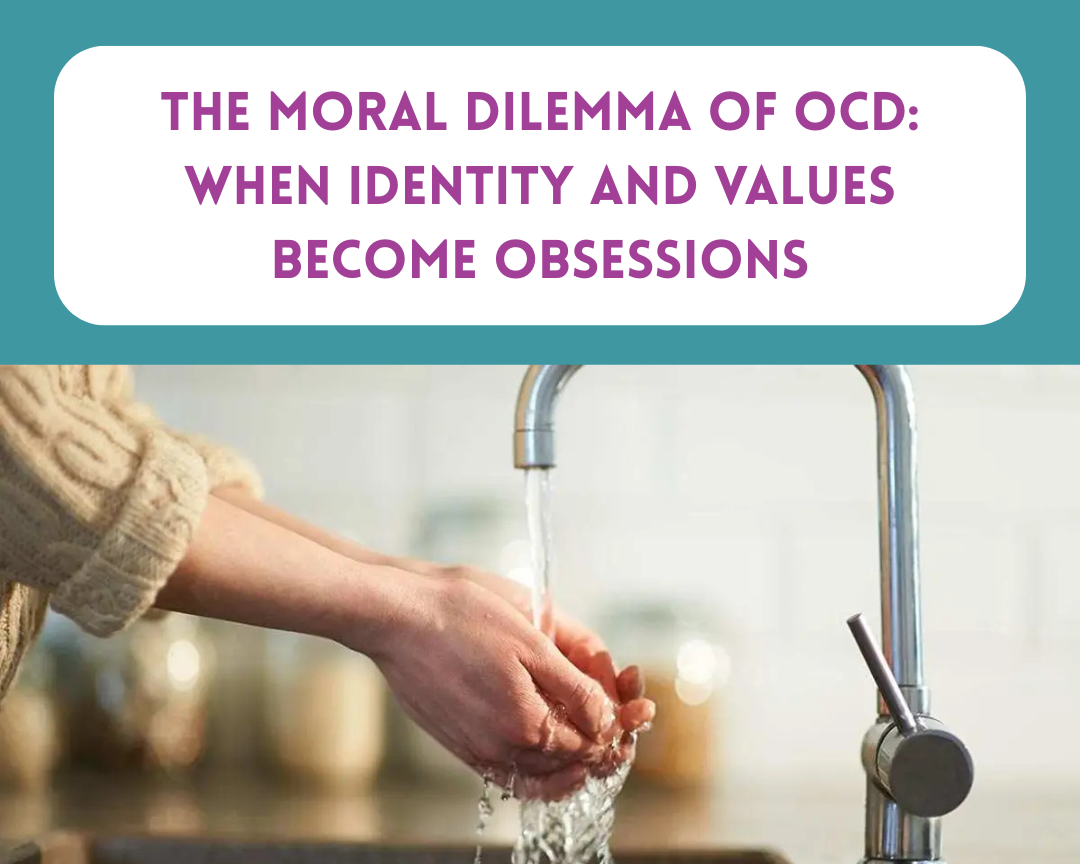
OCD is marked by unwanted, intrusive thoughts (obsessions) that cause anxiety, and repetitive behaviors or mental acts (compulsions) aimed at reducing that anxiety. For example, someone might fear germs and cope by washing their hands excessively. These cycles can become time-consuming and distressing, often interfering with daily life.
Separation Anxiety Disorder
Separation Anxiety isn't just limited to children—it can affect adults too. It involves intense fear or distress about being away from someone you’re deeply attached to, like a parent, partner, or child. This can lead to avoidance of travel, school, or work, and may cause physical symptoms like stomachaches or panic when separation occurs or is anticipated.
Therapeutic Methods We Use
Behavioral approaches to treatment are particularly helpful if you suffer from social anxiety, Obsessive-Compulsive Disorder (OCD), or other specific phobias, but can also be applied to other situations. With exposure therapy, you will face the fears that cause anxiety, either by imagining them or by reenacting real-life scenarios, within a safe and controlled environment. Through repeated exposure, your body’s anxiety response will gradually diminish.
Additionally, Cognitive Behavioral Therapy (CBT) for anxiety will help you identify and challenge the negative self-talk that perpetuates anxious feelings and behaviors. And Acceptance and Commitment Therapy (ACT) will help you connect with your values and then make lifestyle adjustments to align with what matters most to you.
Somatic therapy approaches that we do, like Somatic Experiencing, breathwork, EMDR, and Brainspotting can be powerful tools for treating anxiety by helping the body release stored stress and trauma that talk therapy alone may not fully reach. These methods focus on the mind-body connection, recognizing that anxiety often lives in the nervous system as much as in our thoughts. Somatic Experiencing gently guides clients to notice and discharge physical tension and survival responses trapped in the body. Breathwork helps regulate the nervous system by shifting breathing patterns that fuel anxiety. EMDR (Eye Movement Desensitization and Reprocessing) and Brainspotting both work by accessing the brain’s natural healing processes, helping to process and integrate overwhelming memories or sensations that may be driving anxious responses. These therapies offer a deeper, body-based path to calm, resilience, and lasting relief.
You may be feeling restricted by anxiety right now but the counselors at Balanced Awakening hold the hope and vision that you won't have to struggle with its symptoms forever. There are many options for overcoming the impact anxiety has on your life and we have the tools and knowledge to help you live a more rewarding life.

But Maybe You’re Not Sure If Anxiety Therapy Is Right For You…
My anxiety is too severe for treatment with a therapist to work.
It takes a lot of courage to come to therapy when you have anxiety. After all, talking with a new anxiety therapist could temporarily raise your anxiety level even higher. Although you may experience a spike of anxiety initially, once you establish rapport with your counselor, you should begin to feel much more comfortable. With each subsequent session, your baseline for anxiety will continue to decrease.
What if I’m too busy to schedule anxiety counseling?
We understand that people who struggle with anxiety usually have a lot on their plates already. Fortunately, by committing to anxiety therapy that only amounts to one hour per week, you can make inroads in managing your anxiety that will benefit your well-being. Perhaps you will use anxiety therapy sessions to determine how to re-prioritize your time and create a little more space for yourself. Or, if you struggle with panic attacks, the treatment you receive will free up time that’s currently taken up with recovery.
I worry that in anxiety therapy, I will either have nothing to say or talk too much.
Our anxiety therapists in Chicago specialize in treating anxiety, catering to individuals at any point on the readiness spectrum. We are here to support you, meeting you wherever you are in your journey. If you're unsure of what to say, we can provide guidance to help you get started. On the other hand, if you feel overwhelmed with thoughts, we can assist you in determining the most beneficial topics to discuss.

Don’t Let Anxiety Dim Your Inner Light
With anxiety in check, you can feel more present, grounded, and free to live the life you want. At Balanced Awakening, our therapists can help you understand your anxiety, develop tools to manage it, and create meaningful, lasting change.
Ready to get started? You can schedule an appointment online, or if you’re not sure which therapist is right for you, complete our Client-Therapist Matchmaking Form and our team will help connect you with the right fit.
1 https://www.cdc.gov/nchs/covid19/pulse/mental-health.htm
Anxiety-Related Blog Posts



FAQs About Our Anxiety Therapy in Chicago
-
Anxiety therapy is a type of talk or cognitive behavioral therapy to help you better manage anxiety so it interferes less with your day-to-day life. In anxiety therapy, we work with you on how to cope better with anxiety, giving you tools and ways to approach anxiety so that it is less prominent in your life. Imagine a day where you don’t think much about your anxiety - we can help you get there!
-
Anxiety can be caused by a combination of factors, including biology, environment, life experiences, and thought patterns. Some people may be more prone to anxiety due to genetics or imbalances in brain chemistry, particularly in areas that regulate fear and stress. Others develop anxiety in response to stressful or traumatic events, such as childhood adversity, abuse, loss, or sudden life changes. Personality traits like perfectionism or a tendency to overthink can also contribute, as can chronic stress from work, relationships, or health concerns. Often, it’s not just one cause but a mix of influences that shape how and when anxiety shows up.
-
Worry is perhaps one of the most common and pervasive ways that anxiety can show up - worry that things will go wrong, worry that you won’t be liked, worry that you won’t do well on a test or work task. There’s also things like social anxiety, where one might be afraid to be with or connect with others. Panic attacks and obsessive compulsive disorder fall under the umbrella of anxiety as well. Anxiety therapy can help with all of the ways that anxiety might be showing up for you.
-
Anxiety activates the body's stress response, triggering a cascade of physical reactions that can be intense and uncomfortable. When you feel anxious, your brain signals the release of stress hormones like adrenaline and cortisol, which prepare your body to respond to a perceived threat—even if there isn’t a real danger. This can lead to symptoms like a racing heart, shallow breathing, muscle tension, dizziness, sweating, and gastrointestinal issues such as nausea or an upset stomach. Over time, chronic anxiety can wear on the body, contributing to fatigue, sleep disturbances, weakened immunity, and even long-term health conditions like high blood pressure. Though anxiety is rooted in the mind, its effects are very much felt in the body.
-
The frequency and duration of anxiety therapy often depends on how pervasive anxiety is in your life. Your therapist will assess your symptoms and experience of day-to-day life and advise you on how many sessions you may need to feel better and how frequently those sessions may occur. Most people benefit from weekly anxiety therapy sessions for a few months in order to see bigger changes in their life.
-
All therapists at Balanced Awakening have a strong foundation in psychotherapy and mental health concerns of women. Our anxiety therapists have additional training specifically in anxiety treatment, and routinely see clients who are working on managing anxiety.
-
In the first two sessions, your therapist will ask you questions about your life currently, your history, and where you hope to be in the future. From there, you and your therapist will discuss goals for anxiety therapy and a plan of action to help you feel better sooner. Some sessions may focus on understanding your anxiety better, learning tools to cope with anxiety, or possibly even engaging in exposure therapy, an effective anxiety treatment.
-
If in doubt, give it a try! Our anxiety therapists are not only trained to help you with anxiety, but to help you improve your overall life in other ways. So even if you’re not sure how much anxiety is impacting you, if you have a hunch that you could feel better, we can help you.
-
Yes! But with some exceptions. There are 3 situations where, legally and ethically (whether we want to or not) we would have to break your confidentiality. These include if we learn of any potential child or elder abuse from you, we determine that you are at risk of harming yourself or someone else, or we receive a court order for your medical records. Also, some of our providers are under supervision and regularly consult with their supervisor about their client sessions. Supervisors have the same obligation to client confidentiality.
-
Our trauma therapy rate for the first two sessions is $250. After that, 55 minute sessions are $225.
Most of our anxiety therapists are in network with United Healthcare/Optum, BCBS PPO and Aetna insurance.
-
Absolutely! If your symptoms or presentation of anxiety has been narrowed down to a specific anxiety disorder, your therapist can immediately take a more focused treatment approach based on the diagnosis (if you’d like help with the specific diagnosis first). There are specific treatment protocols that match up with specific diagnoses - and that have been proven through research to work. So in the situations where a specific anxiety diagnosis is agreed upon, your therapist can consult the research for the most effective treatment route to take.
-
Yes! We offer virtual trauma therapy sessions as well as in-person. Sometimes for scheduling reasons or otherwise, it’s easier for clients to engage in anxiety therapy virtually.
What Our Clients Are Saying
-
During our first session Hannah was proactive in creating a plan of action to properly diagnose me and address my concerns. Detailed. Office is beautiful. Love the decor, relaxing ambiance and free tea.
———
-
She was very kind and thorough during intake and the entire office looks like something out of a lifestyle magazine.
———
-
The office is lovely and welcoming, the in-take paperwork helped me prepare for what I wanted to talk about and gave me a starting point.
———
-
Dr. Yang is warm and empathic, and made me feel comfortable from the very beginning.
———
-
Emma has been very supportive through major life changes for me. Her sweet and gentle nature made it easy for me to feel safe to open up to her. I am very grateful for her support and kindness.
———
-
It was my first visit and she made me feel so safe. I opened up right away!
———
Over the course of this pandemic, anxiety has been a familiar feeling for many. But you may have noticed a recent shift in what exactly you’re feeling anxious about. Fears about exposure and infecting loved ones may now be coupled with anxieties about returning to the office, socializing, or even the thought of having to wear jeans again. Why is it that anxiety seems to be on the rise as cases of COVID-19 are on the decline?
With vaccinations rolling out and a sense that there is an end to the pandemic in sight, many things remain uncertain. Will our “new normal” look like our “old normal”? Will work-from-home arrangements remain or will we be forced to return to working in an office? Will variants of the virus lead to future lockdowns?
If you are noticing new or worsening anxiety related to the pandemic, here are a few tips and strategies for managing the unique challenges of life after lockdown: