

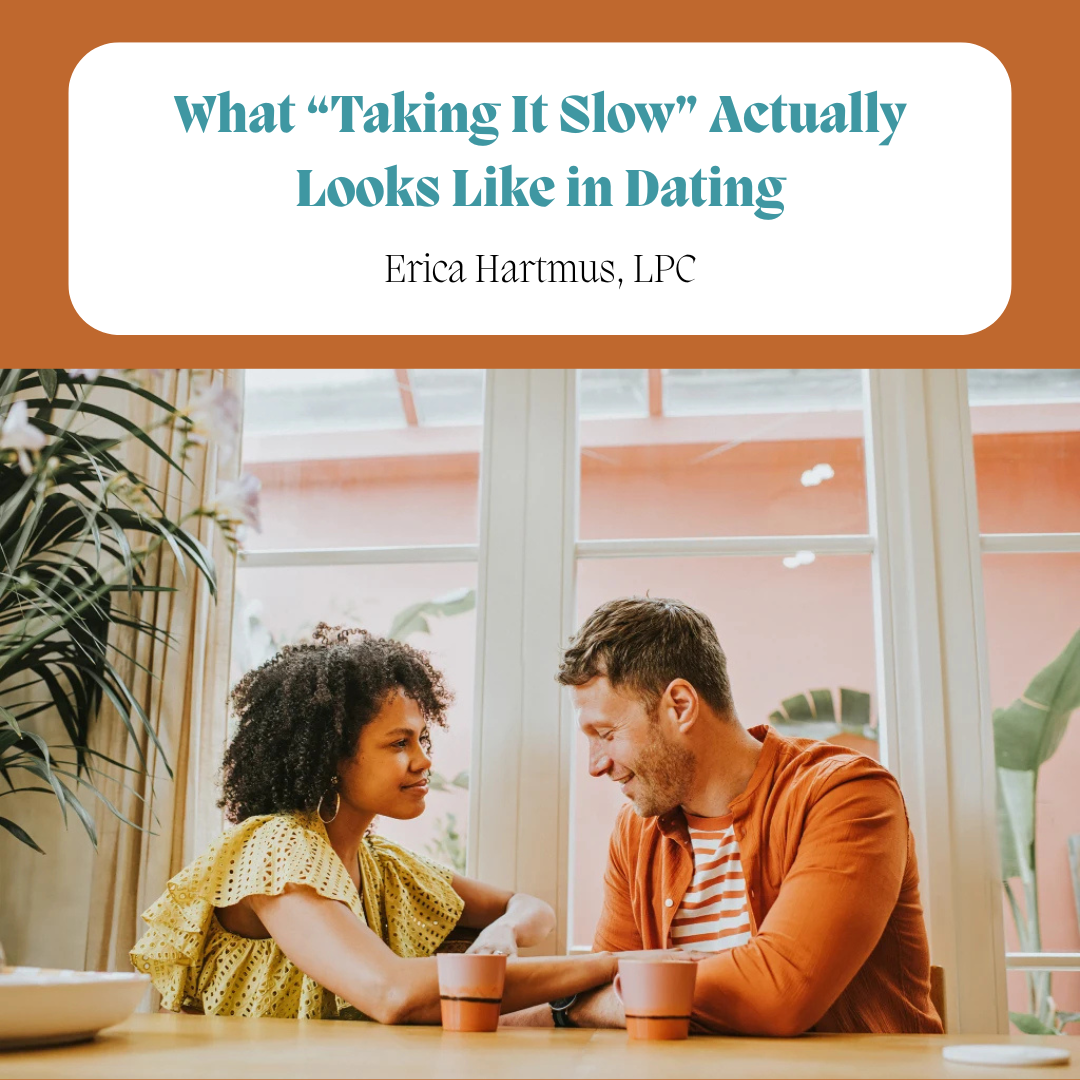
Dating intentionally is often harder than it looks. While we might have every intention of showing up in a way that aligns perfectly with what we want in a relationship, we often forget to account for the rush of hormones, the pressure to perform, and the eagerness to find our person that gets in the way. These factors can be blinding, a smoke screen that leads us to repeat past patterns and fall for the same types of people who didn’t end up serving us before.
For many of today’s daters, “taking it slow” refers to approaching dating with intention. It may involve remaining present to decipher what the person on the other end of the table has to offer, what their strengths and weaknesses might be as a partner, or how they fit into your future. It may mean waiting to explore intimacy until you have a better feel for who that person truly is. It may even look like creating pockets of time to explore dating, and then putting dating on the back burner when something more pressing shows up. Whichever way you mean it, taking things slow in dating is a genuine commitment that involves a lot of mental and emotional labor, but leads to a very big reward.
Let’s uncover what it actually takes to commit to dating in a way that aligns with our personal goals.
But… “Slow” Feels Unnatural!
Many of us were conditioned to believe that romantic connection is held up by a backbone of passion, or an instant sense of “knowing”. We grow up hoping to experience love at first sight, or love against all odds, or love that blooms in complete darkness. The lesson, overall, is simple: Love is not logical, it is entirely emotional.
It’s a cute thought, and in theory, a lovely way to start a life-long partnership. However, believing the rhetoric that love has to come around in a grand, fantastical way is keeping many people from making informed decisions while dating. This kind of “passion first” dating process can lead to a lot of sparks, but also a lot of crashing and burning.
My advice? Keep an open mind to it, but also proceed with caution.
Just like any other life-altering decision, I believe the best way to ensure a positive outcome in dating is to gather all of the information you need to make an informed choice. Now, like I said earlier… This is harder than it seems. It’s so easy to be tricked by our bodies, or our subconscious, into thinking that desire and attraction equal life-long satisfaction. When we meet someone new, the signals our bodies send us often point to hope. We’re tricked by the increased dopamine in our systems into thinking that this person is what makes us happy, rather than this situation. Our bodies want us to procreate. Biology will do whatever it takes to get us to do so, even if it’s against our better judgement.
To combat this, learn to reframe what signals you look for when getting to know someone new. Instead of only following the butterflies, or flutters of arousal, look for a feeling of trust and safety. Over time, the small moments of connection, repeated interactions, and gradually learning who someone actually is leads to a healthy, informed connection. We want to find out if the long-term potential is there, rather than looking for who they appear to be in the early stages of attraction.
Once we master the ability to see past the haze of biologically motivated excitement, we can begin to focus on what our brains are telling us, too.
What Does Taking It Slow Look Like?
Instead of viewing “taking it slow” as a lesson in self-discipline, learn to embrace the beauty in the small moments of getting to know someone. We’re not trying to “make them wait for it”, or reward patience with presence. We’re trying to pace our emotional investments to match the amount of information we actually have about the person we’re exploring.
In practice, this might look like…
Letting time pass between milestones:
Reflect on any feelings of pressure to lock someone down, or to put a label on things. Somewhere along the way, we’ve learned to see dating as a competition rather than a mutual decision making process. Let yourself say “I don’t know yet” when you’re exploring the connection. There’s no race here; labeling things, meeting the family, or even planning dates months into the future are all going to be there when you’re ready to make that step. And if the person you’re seeing isn’t accommodating to that pace, they’re likely not the one for you.
Building safety before getting deep:
Many individuals with deep emotional wounds struggle with over-sharing. This comes from a need to reduce anxiety, by testing the person you’re with to make sure they still see you as valuable, even though you’re wounded. However, this can blur your intentions. By acting too fast to bare your soul, you’re tricking yourself into thinking that this person is already a close and safe connection. Sharing your worst breakup stories before knowing the other person’s music taste is rushing into a feeling of safety, without knowing if that person is actually a good match for you. Set boundaries for yourself, wait a bit before you dive into the nitty gritty. Save the emotional bonding for after you’ve decided the person you’re seeing is worthy of getting to know your past.
Maintaining your life outside the relationship:
Try not to fall into the pattern of meeting someone, getting excited, and spending multiple days in a row with them right off the bat. When we have a crush, or are developing feelings for someone, it’s natural to want to spend as much time as possible with them. However, doing so can impact your ability to reflect and check in with your dating goals. Continue to prioritize friendships, routines, and hobbies. Let the blossoming relationship add joy and excitement to your weeks and months, rather than your hours and days. If there’s long-term potential, you have plenty of time ahead of you to spend every day together. Your friends and your future self will thank you for it.
Watching how someone behaves over time:
Try not to take someone’s first impression to heart when getting to know them. It’s easy to maintain an appearance of charm, or kindness, or gratitude for a few weeks. Slowing down allows you the chance of seeing how someone handles stress, conflict, disappointment, and real life. The calm, cool, and collected person you went on a first date with may end up being an anxious ball of nerves and irritability when that mask finally comes down. Let yourself wait and see.
There are so many ways to accomplish the task of taking things slow, more than I can write in a single blog post. But the most important thing to remember is this: Getting to know someone takes time. You may think you have someone figured out, but only time can tell you if your assessment is based in fact.
Getting Used to Slowing Down.
For those of us who have never had a casual start to a relationship, slow dating can feel boring, or unsettling. It can trigger insecurities, by removing the opportunity for instant obsession. When feeling wanted has been hard to come by, it’s difficult to convince ourselves that someone will want us for us once they get to know who we really are.
Without that instant reassurance of passion and intensity, you might find yourself wondering:
“Do they even like me?”
“Aren’t I supposed to feel more excited?”
“If I’m questioning things already, doesn’t that mean it’s doomed?”
I get it! It’s genuinely challenging to provide ourselves with reassurance when dating, and believing that we deserve to have what we want in a relationship is equally hard. But healthy relationships often begin in a gentler way. Instead of dramatic highs and lows, we want to see steadiness, prolonged interest, and questions. Instead of urgency, we want to feel patience, and trust in the process.
While that pacing might not allow us to canonically live out our “love at first sight” fantasy, it does open the door for an overall easier path to finding “the one”. It eliminates the repeated heartbreak that comes with dating people who don’t truly align with you, and provides more opportunity for a relationship built on a foundation of knowing what to expect.