

When the Days Get Shorter: Understanding Seasonal Depression with Compassion
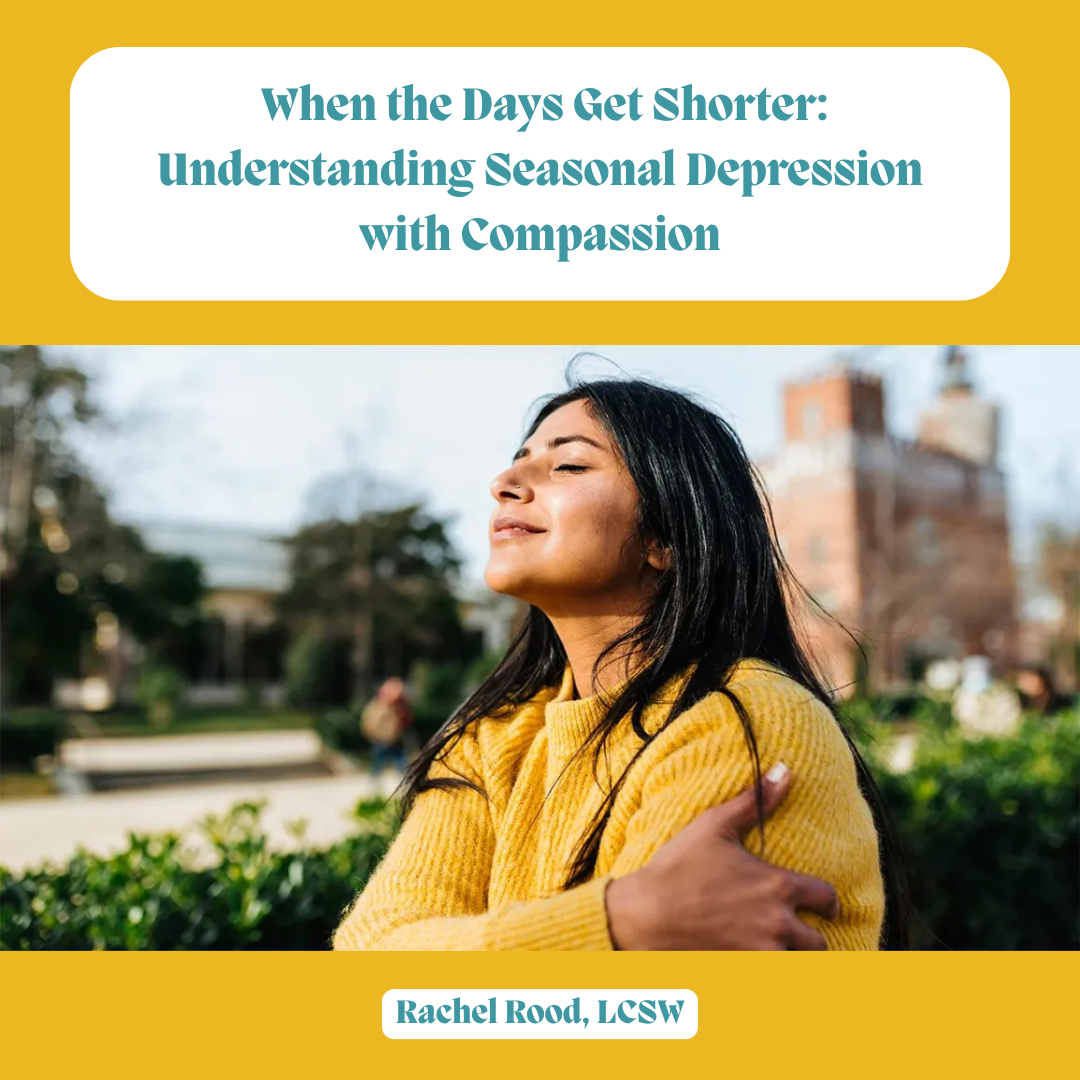
It happens every year: the days get shorter, the air gets colder, and many of us start to feel our energy slip away. As the seasons change, the effects of seasonal depression can be subtle at first. Maybe you don’t immediately realize you have been feeling more down or irritable. Over time, you might notice that you are sleeping more than usual or losing interest in things you typically enjoy. Before you know it, the idea of hibernating on the couch until April feels pretty appealing.
For some of us, the joy and excitement of the holidays can carry us through the beginning of the changing seasons, but once the holiday lights fade, that’s when it gets really tough. A few weeks in, we then begin to realize the changes that have happened. And for others, the holidays are a source of additional stress.
Experiencing some of the symptoms listed below is normal and expected when seasons change, but persistent symptoms that interfere with day to day life may indicate seasonal depression. People who experience seasonal depression, also known as seasonal affective disorder, may experience any of the following cluster of symptoms:
Loss of interest or pleasure in activities you typically enjoy
Changes in appetite (eating more or less than usual)
Changes in sleep (sleeping in later or more than usual)
Difficulty concentrating or making decisions
Feeling slower, fatigued, or a loss of energy
Feeling sad, hopeless, worthless or guilty
Thoughts of death or suicide
Why does this happen?
Feeling more sluggish or off during the colder, darker months is not a personal failure—it’s a biological response. Reduced sunlight affects our bodies in multiple ways:
Reduced sunlight and vitamin D.
Sunlight helps our bodies create vitamin D, which plays a role in the production of serotonin. Serotonin is an important hormone that helps regulate mood, sleep, appetite, and more. Therefore, when there is less sunlight, there is less vitamin D, leading to a drop in serotonin levels. While researchers are still studying the exact mechanisms, we know that lowered serotonin is associated with low mood, fatigue, and irritability.
Circadian rhythm disruption.
Daylight savings and the subsequent change in when the sun rises and falls causes a disruption in your circadian rhythm. This change can throw off our internal clock, disrupting our sleep patterns, appetite, energy levels, and overall emotional regulation.
Increased melatonin production.
Darkness invites an increase in the production of melatonin in our bodies. Melatonin is the signal that it’s time for us to sleep. An increase in this hormone can lead us to feel groggy, fatigued, and ready for bed at 4:30 p.m.
Other contributing factors.
A family history of depression increases the likelihood of developing seasonal depression, as does your geographic location. If you are living somewhere like Miami that has more consistent sun year-round, you may not feel the effects that much. However, if you are living in Chicago and facing more intense cold and shorter lengths of sunlight, you are more likely to experience seasonal depression.
So, what can we do?
If the colder months are taking a toll on you, here are some things you can do to navigate more challenging times due to the weather:
Stay active.
This may feel counterintuitive, as exercising may be the last thing you want to do, but it is a powerful natural antidepressant. Physically moving your body quite literally warms you up from the brittle cold, as well as increases endorphins, improves circulation, and helps regulate mood. Incorporating movement doesn’t have to be intense, time consuming, or expensive. Here are some options to consider:
Bundle up and get some fresh air for a 20-30 minute walk outside
Try a hot yoga class (some studios offer free community classes or donation based classes)
Follow along with a free online workout
Gentle stretching or mobility exercises on your own
Socialize.
Staying connected to others is vital and making plans with friends or family can help keep the winter blues at bay. Shared experiences, laughter, and physical affection are also natural antidepressants. Try planning:
A game night
A coffee date with a friend
A festive outing to embrace the season (ice skating with your family or a holiday market)
A cozy movie evening
A craft night
This gives you something to look forward to and counters the natural urge to withdraw.
Stick to a schedule or routine.
Again, this may feel counterintuitive. You might want to let yourself sleep in later or take those additional naps throughout the day. It feels natural to wind down and go to bed when the sun sets at 4:30pm, that’s how our body is wired, as explained previously. However, sticking to a routine helps create predictability and safety, which is also how our body is wired. The more we regularly go to bed and wake up around the same time, the easier it will become. Waking up at a regular time in the morning can also ensure we are getting as much natural sunlight as we can.
Practice mindfulness and gratitude.
It can be helpful to create a ritual that you can savor and return to regularly. For example, enjoying a warm cup of coffee or tea in the mornings while reading a book. Engage your senses as you take a sip of your drink, noticing the taste, smell, and feel of it as it warms up your body. Light some candles in your home and take a minute to enjoy the warm lighting and scent filling your space.
It may be tempting to wish the cold would hurry up and go away, but doing that actually increases stress and anxiety. Taking a moment to slow down and be grateful for what’s in the here and now will create a more fulfilling feeling.
Seek support.
If any of these symptoms are causing significant distress in your life or make it hard to function, then it may be time to seek help. That may look like seeking support from our loved ones, seeing a doctor to see if there are any underlying medical issues, or starting therapy.
Remember, it is completely normal to have a harder time during the darker and colder months—you can’t fight biology. It is also completely normal to lean on others for support. With intentionality, routines, connection, and compassion for yourself, it is possible to move through this transition with more care.
If you are experiencing thoughts of suicide or harming yourself, please reach out to 988 or a mental health professional.
If the shorter days bring heaviness, low energy, or a desire to pull inward, support can make a difference. The Balanced Awakening Collective offers gentle, body-based practices and reflections designed to support you through slower seasons — without pressure to feel differently than you do.
👉 Learn more about the Balanced Awakening Collective