

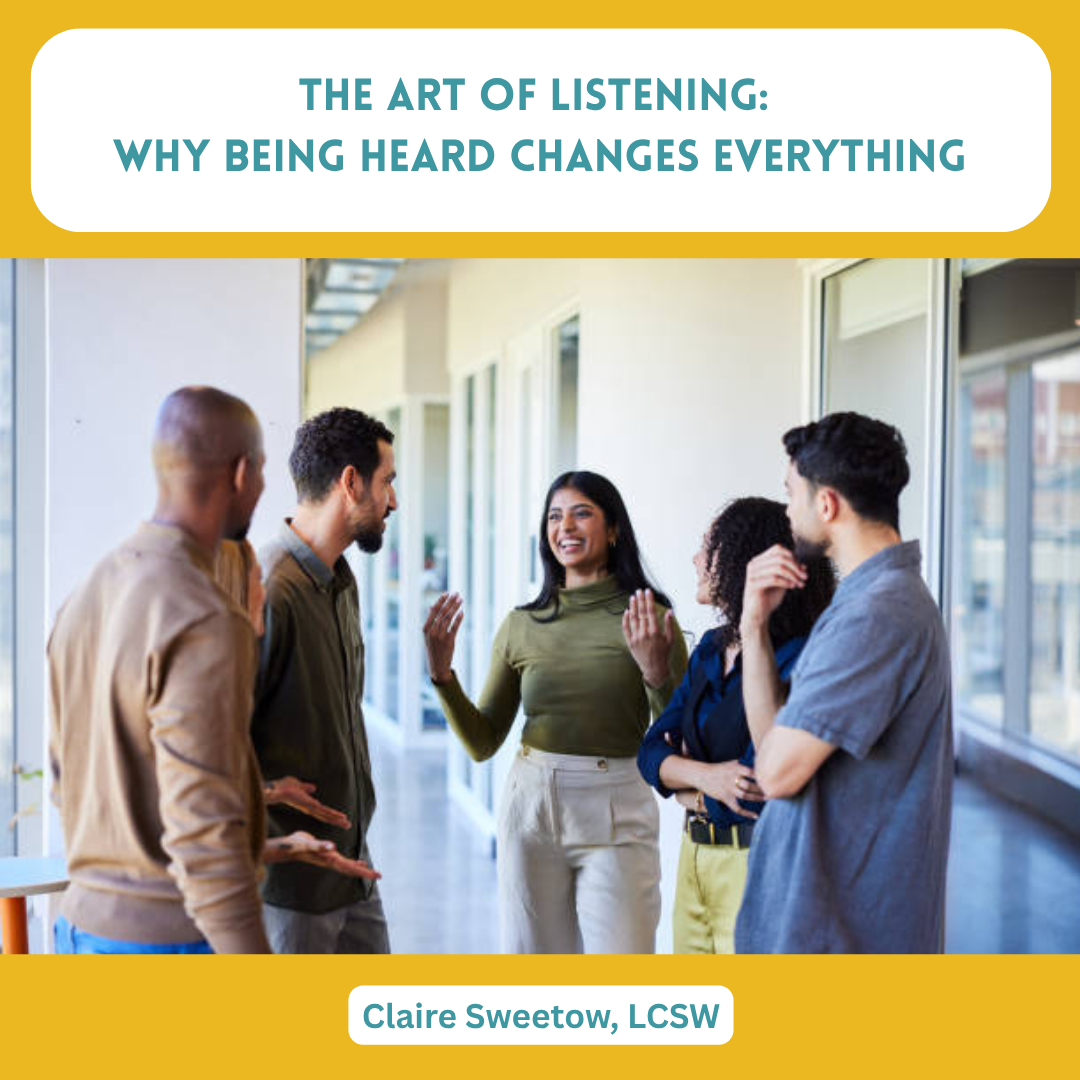
“Are you listening to me? ”: a common refrain that signals irritation, frustration, and disappointment. But beneath those words is one person desperate to feel heard and terrified of feeling invisible. Every day we speak, and yet we often feel unheard. Every day we hear, without truly listening. Why do we struggle to feel truly heard and understood, and why do we struggle so deeply to truly listen to others? The definition of listening is “to pay attention to sound," “to hear something with thoughtful attention: give consideration," and “to be alert to catch an unexpected sound” (Merriam-Webster).
Why Is It So Hard to Truly Listen?
Many of us consider listening to be the first definition, simply paying “attention to sound." But what does it mean to “hear something with thoughtful attention” and “give consideration” to something? How do our conversations change when thoughtful attention is given to the other person? The mechanics of conversation and dialogue often follow a predictable pattern. One person speaks, the other listens and responds, and so on. However, it is not uncommon that when we are listening to the other person, we are also thinking and formulating our own response as they are speaking. While natural, this can inherently block our ability to listen attentively and without bias because we are not thinking about the other person, but instead thinking about ourselves as the speaker talks.
In a way, this is how we are wired as humans. We experience the world through our individual, unique lens. We take in information, apply it to ourselves, and create a response based on this reflective process. And this method of communication is not inherently bad. It is often how we relate to others. We can, and often do, connect deeply with others in this way. However, this same pattern of interaction can also lead to the breakdown of communication when we are not able to fully connect with or understand the other person. When we are not able to set aside our pride, our biases, and our insecurities, we cannot understand the person in front of us.
What Does It Mean to Truly Listen?
True listening sets aside our own agenda and allows us to be truly impacted, perhaps even changed, by what the other person is saying. It is the cultivation of absolute, uninterrupted presence and the ability to enter another person’s perspective entirely. It does not mean we abandon ourselves in this process. We do not need to become the other person or take on their opinions, outlooks, or identity, but we do temporarily enter their world in an effort to foster real, meaningful empathy.
Why Feeling Safe Changes the Way We Listen
However, the ability to listen is often deeply impacted by the relationships we are in. It becomes far more difficult to listen when we do not feel safe in a relationship. When not safe, we begin the conversation from a defensive position, which immediately blocks our ability to practice active, empathetic listening. The ultimate irony in this is that we can break down defensiveness via empathy and validation through listening. Therefore, both members of the conversation must be willing to listen to one another in order to create a safe conversation.
How to Practice Active Listening in Difficult Conversations
The next time you start a difficult conversation, think about implementing these steps:
1. Actively listen: set aside distractions and face one another, making eye contact. As one individual talks, work to pay attention to what they are saying. Gently notice any emotions or urges to interrupt and do your best to set them aside. Let the other finish their thoughts completely before responding
2. Reflective statements: Practice responding by reflecting back what you have heard. This can sound like, "I heard you say …” or "What I’m getting from that is …” Do your best to accurately reflect the other’s words, rather than moving into personal interpretation of the message or digging for deeper motivations.
3. Practice validation and empathy: Try validating the other person. This can sound like, "It makes sense that [blank] because of [blank].” Empathy is the ability to understand another person’s emotional state in a supportive, collaborative way. It can sound like, "I imagine you might be feeling [blank] because of [blank].”
What Happens When We Feel Truly Heard?
And watch what happens. When we feel truly heard, we also feel seen and understood. Defensiveness turns into vulnerability, our walls break down, and we can connect.
Unfortunately, not every conversation will be radically transformed by listening. Both partners need to be bought in and devoted to the process, not only the listener. However, we can also imagine how different the world might be if we could not only hear one another, but also truly listen. If we could understand others, rather than constantly competing and attempting to “win” conversations. It may not solve everything, but it’s certainly worth the attempt.